Recording a Relative’s Story Without Turning It Into an Interview
Recording a relative’s story feels more natural when you agree on boundaries, choose a simple prompt, and let the conversation follow their lead.
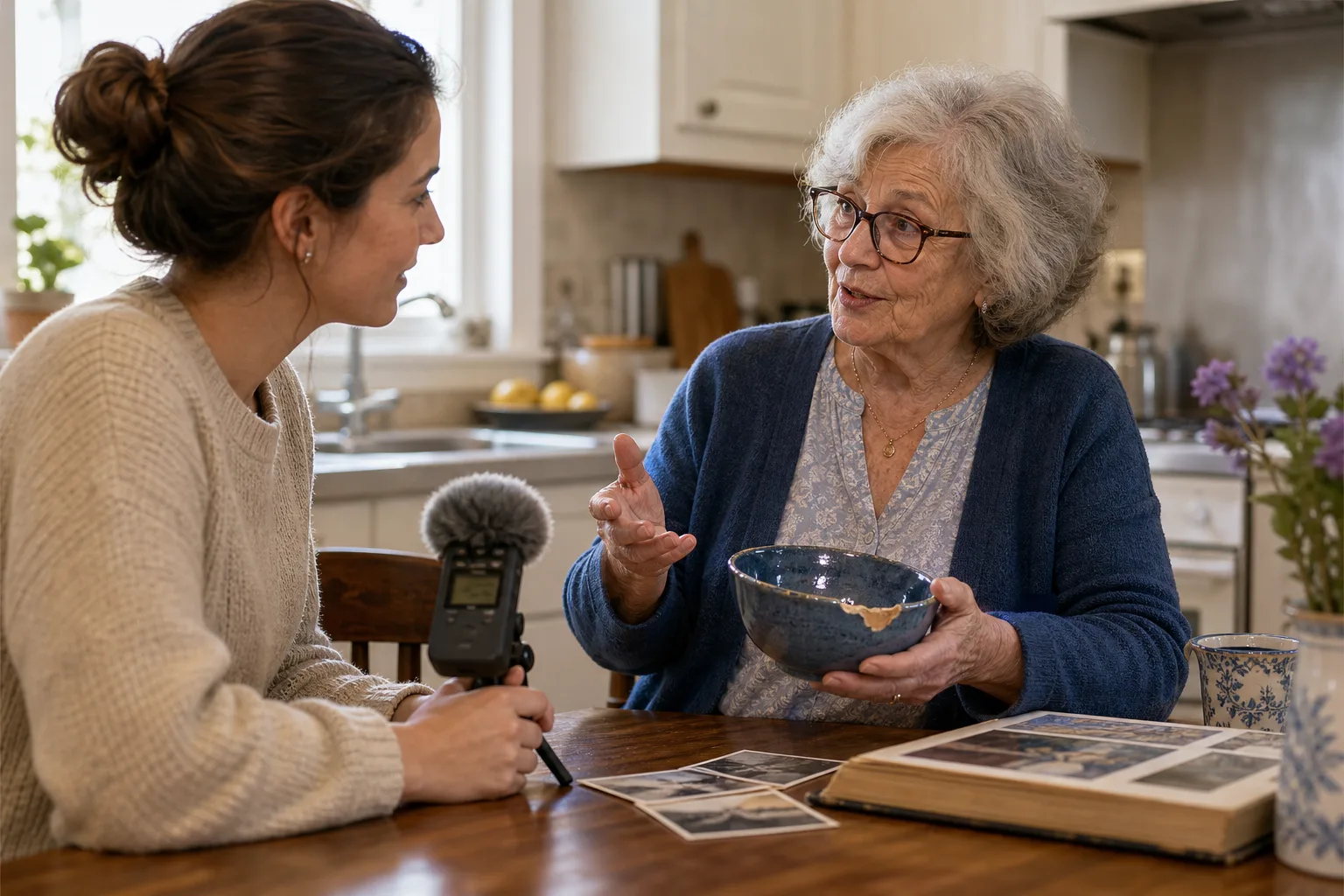
Your aunt is describing the chipped blue bowl beside her mother’s sink, and you reach for your phone before the detail slips away. Recording a relative’s story can preserve a moment like this, but a screen and a list of questions can make a visit feel formal. A natural conversation begins with a clear invitation, a simple prompt, and room for your relative to choose the direction.
What makes a recording feel like a conversation?
A conversation can have a purpose without following an agenda. It leaves room for pauses, detours, corrections, and subjects that remain untouched. If your relative is searching for a name, silence may be part of remembering rather than a gap you need to fill.
Pay attention to what they choose to emphasize. A story about a first job might turn toward a neighbor’s garden; that detour may matter more to the speaker than the question you prepared. Your task is not to extract a complete life history. Listen, then ask a useful follow-up when one naturally arises.
How do you ask for permission clearly?
Raise the idea before opening a recording app. Explain why you would like to record and who you imagine might hear it. Make clear that an unrecorded conversation is equally welcome, and that your relative can decline a topic, ask for a pause, or change their mind about being recorded.
Ask separately about sharing. Keeping a file for a few relatives differs from posting it in a group chat, adding it to a public family tree, or publishing it online. A person may agree to one use and not another.
You might say, “I’d love to remember your stories about summers at the lake. Would you be comfortable talking about one? I could record it for the family, but we can just talk, and you can decide what stays private.”
Rules about recording and sharing can vary by location and by the service or platform involved. This article is not legal advice, and a relative’s permission does not by itself settle every question about how a recording may be used or distributed. If you plan public or commercial use, or are unsure about the rules where you live, consult a qualified legal professional and review the relevant service terms before recording or sharing.
What should you prepare before you press record?
Choose a familiar, comfortable place, such as a quiet kitchen table or a favorite chair. Silence phone notifications and set the phone on a stable surface, or use a small voice recorder if a phone feels distracting. Check the battery and available storage, and tell your relative when recording starts and stops.
Bring a few prompts, not a questionnaire. Offer one at a time, then let the speaker decide whether to follow it:
- Notice whether a familiar home, street, school, or workplace sparks a story; if your relative begins telling one, follow their details, and if not, offer a different prompt.
- Notice whether an object your relative has kept interests them; if they want to discuss it, ask what they remember, and if they decline, set it aside.
- Notice whether an ordinary routine from childhood or early adulthood brings a memory to mind; if a moment comes up, ask about it, and if not, move on without pressing.
- Notice whether your relative seems comfortable recalling a person through a specific encounter; if so, invite them to describe it, and if they hesitate, ask whether they would rather change subjects.
- Notice whether your relative is willing to discuss a family change; if they want to continue, listen, and if they pull back, stop that line of questions.
- Notice whether a sound, smell, or seasonal task associated with a familiar place brings up a memory; if it does, let your relative choose how much to tell, and if not, try another opening.
Each prompt is an opening, not a demand for a full account. If a subject does not take hold, move on without trying to make it useful.
How can you follow a story without steering it?
Ask open questions that do not supply the answer. “What do you remember about the old apartment?” leaves more room than “You hated living there, didn’t you?” The second question introduces a feeling your relative may not share.
Use a detail they have already offered as your next prompt. If they mention a neighbor who brought over a jar of jam, you might ask, “What was she like?” or “How did she know your family?” If they pause, wait. You can ask, “Would you like a moment, or shall we leave that part there?”
Reflect what you heard without adding an explanation: “So the move happened after your brother left school.” Your relative can clarify while keeping the story in their hands. Avoid turning a pause into pressure or treating the recorder as a reason to keep asking.
Imagine your uncle begins describing a train trip, then says he would rather not discuss the argument that followed. You stop asking about the argument and offer to continue with the journey or move on. If he chooses the journey, the conversation stays with the part he selected.
What can you do when a story becomes sensitive?
Grief, estrangement, illness, conflict, or private details about an absent person may come up. A change in tone, a direct refusal, or a short answer can be a cue to pause. Ask, “Would you like to keep talking about this, or stop here?” Accept the answer without asking for a reason.
If your relative asks you to stop recording, stop. Offer a break, a change of subject, or an end to the visit. Consider the intended audience before sharing details about people who are not present, and leave out private material that is not needed for the story.
For serious concerns involving health, safety, or legal questions, a family conversation is not a substitute for help from a qualified professional.
What should you agree about the recording afterward?
Before you part, ask what your relative wants you to do next: keep the recording private, let them hear it first, share it with named relatives, or avoid keeping it. Note the agreed audience and any sections they asked you not to share. If their preferences change, respond within what you control; copies already shared or held by a service may not be retrievable, so explain that plainly rather than promising complete removal.
Ask before forwarding, posting, or editing a clip. If your relative asks you to remove a section or delete a copy you control, do so and tell them what action you took. If you cannot remove a copy, explain the limitation and discuss what options remain.
What questions help keep the exchange easy?
What if my relative says, “I don’t remember”?
Accept that answer without trying to coax out a more satisfying one. You can offer a photograph or familiar object as a prompt, then let your relative decide whether to continue.
Should I correct a date or family detail?
Ask whether your relative wants to check it, or make a separate note for later if the detail matters. Keep any later correction distinct from the spoken account rather than editing the recording to make it sound certain.
Can I record with a phone?
Yes, if your relative is comfortable with it and understands when the recording begins and ends. Silence notifications, set the phone down, and avoid checking the screen while they are speaking.
What if my relative asks me to delete the recording?
Delete the copies you control and tell them what you removed. If a service or another person may hold a copy, explain that you may not be able to remove it yourself and check what options are available.
How can you make another conversation feel welcome?
End by asking whether your relative wants to add anything, rather than requesting a polished final message. Thank them for the time, restate what you plan to do with the recording, and wait to share it if they asked to listen first.
Say you have a phone, a quiet kitchen, and an aunt who mentions a chipped bowl. You ask if she is comfortable being recorded for named family members; she agrees. You set the phone down and ask what she remembers about the bowl. When she pauses, you wait. If she asks to keep part of the story private, you honor that boundary before deciding whether the recording should be shared at all. That small agreement can shape the next conversation, too: your relative knows they can choose what to tell and who may hear it.
Keep reading
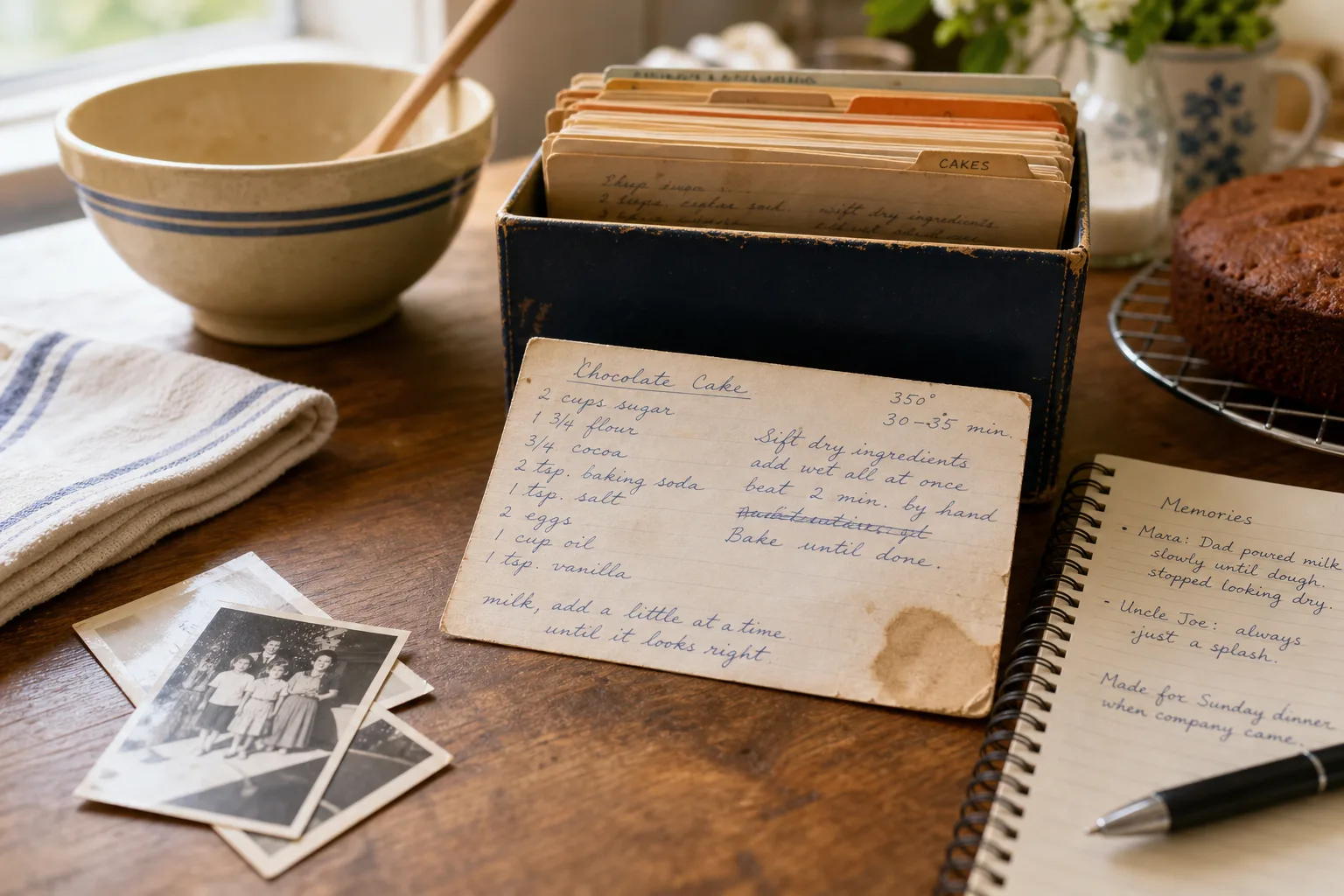
The Recipe Card That Remembers More Than Ingredients
Learn how to document a family recipe card, preserve its wording, and connect it with cooking…

When a Holiday Tradition Needs a New Shape
Adapt a holiday tradition with a clear plan for roles, access, and shared moments, so relatives…