When a Holiday Tradition Needs a New Shape
Adapt a holiday tradition with a clear plan for roles, access, and shared moments, so relatives know what is changing and how they can take part.
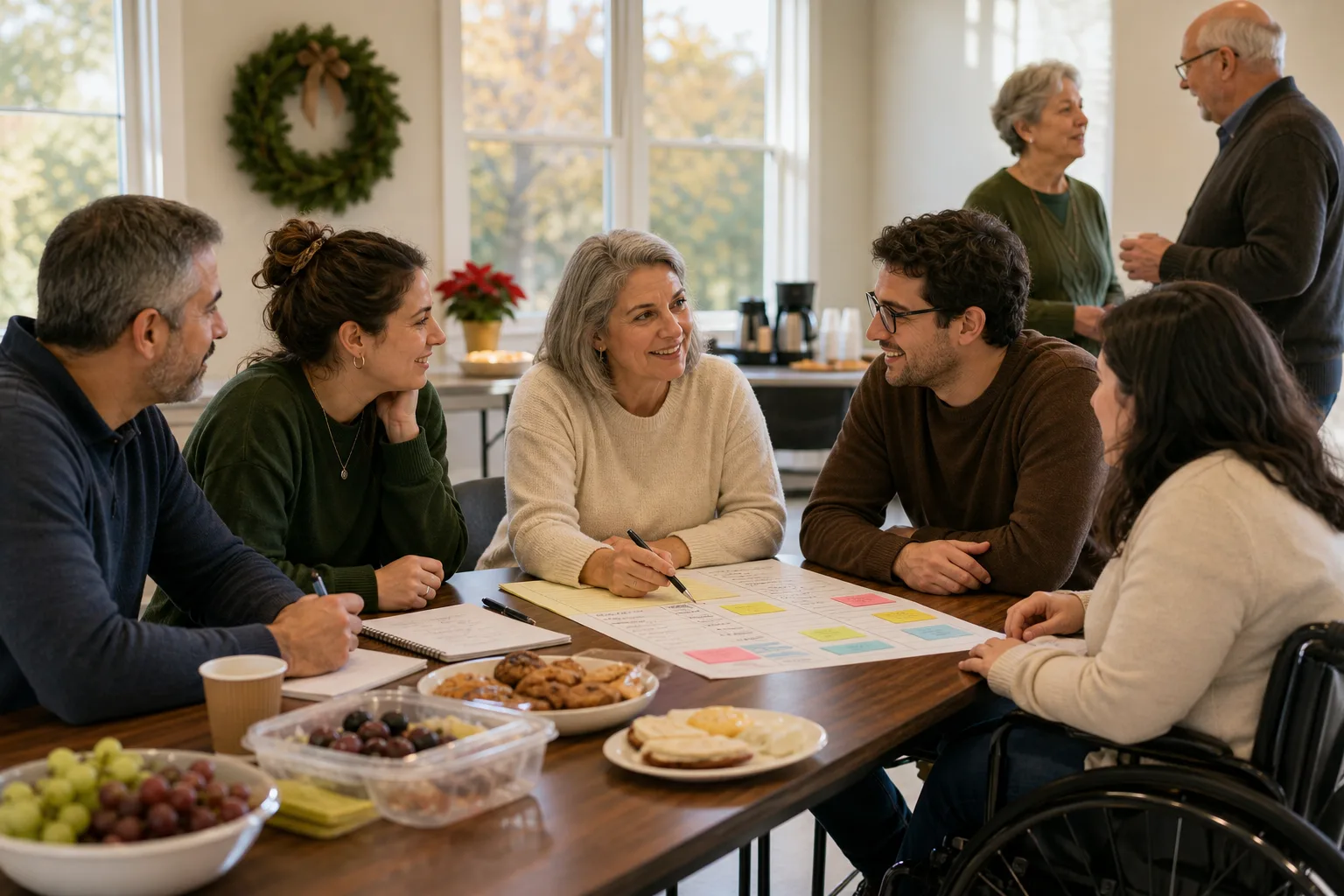
The folding table is still in the garage. This year, your aunt cannot host, your brother is working, and the children have outgrown the late-night drive home. Adapting a holiday tradition can mean more than moving dinner to another house. It can also make the work visible and distribute it fairly. Begin with the tasks behind the gathering, not an abstract debate about whether the old way should continue.
Which jobs keep the gathering running?
Before proposing a new format, list the practical work that usually happens. Include parts people may not notice: planning, shopping, cooking, setting up, driving, accommodating different needs, and cleaning afterward. Ask who usually handles each job and whether that person can do it again this year.
This shifts the conversation from “Who wants to change the tradition?” to “What can the family actually take on?” It also makes hidden expectations easier to challenge. A plan is not shared just because everyone attends; preparation and cleanup matter too.
How do you discuss a change without assigning blame?
Raise the subject well before anyone is buying groceries or arranging transportation. Describe the constraint plainly: “Hosting the full meal is too much this year. Can we decide together what kind of visit we can manage?” Avoid presenting a completed plan as though relatives have already agreed.
A group text can help find a time to talk, while a call or in-person conversation may suit a subject with strong feelings. If people tend to interrupt one another, invite relatives to send their preferences first or take turns speaking. Be precise about what is settled and what remains open: perhaps a full dinner is not possible, but the date, location, and shorter format are undecided.
What should the family decide before choosing a format?
Ask each person to describe the part they want to participate in, rather than assuming everyone values the same feature. One relative may want to cook with the children; another may care most about seeing cousins; someone else may want a quiet moment of remembrance. These preferences do not need to match to be heard.
Then set out the relevant constraints: work schedules, travel, caregiving, mobility, dietary needs, available space, and the effort each household can contribute. A short visit might solve a hosting problem but create a travel problem for someone else. Put competing needs beside the possible arrangements before settling on one.
How can you turn the discussion into a workable plan?
Use a simple planning list that connects each observation to a decision. It prevents vague offers from becoming unpaid work for the person who usually organizes everything.
- Hosting: Check whether the usual host can prepare and welcome guests. If they can, keep the usual home in consideration; if not, choose a guest’s home, a suitable shared space, or a shorter visit that needs less setup.
- Food: Check who can cook and whether guests have dietary needs. If a full meal is manageable, divide the cooking; if it is not, arrange simple shared food or a dessert gathering instead.
- Travel: Check who can drive and how far relatives must go. If the usual location is difficult to reach, move to a more accessible place; if a different location creates new travel problems, choose a date that allows other transportation arrangements.
- Access: Check whether guests can enter, sit, and use the space comfortably. If the home meets those needs, keep it as an option; if it does not, find an accessible venue or ask what accommodation would help.
- Timing: Check work, caregiving, and rest needs. If a long gathering excludes people or exhausts the host, shorten the visit; if a shorter visit conflicts with work or travel, meet on another day.
- Cleanup: Check who will clear dishes and restore the space. If the usual host would carry the burden, assign named helpers; if no one can take the task, choose food and a venue that require less cleanup.
- Remote participation: Check whether an absent relative wants to join and what would make that comfortable. If live video suits them, arrange a call; if it does not, offer a phone call, a recorded greeting, or a separate visit.
Say you are planning an invented holiday visit. The usual host says they cannot cook or clean this year. Two relatives have work later that day, and one family member cannot manage stairs. First, the family removes a full dinner at the upstairs home from consideration. One relative offers an accessible community room, another takes responsibility for store-bought snacks, and a third agrees to handle setup and cleanup. They choose an afternoon visit that ends before the work shifts. The plan keeps people together without assigning the old host work they cannot manage, though it gives up the familiar long meal.
What questions come up when a holiday tradition changes?
What if one relative wants everything to stay the same?
Ask which part of the familiar gathering they most want to keep, then consider whether it can fit within a different plan. Their attachment deserves a hearing, but it does not require another person to continue work they cannot manage.
What if relatives disagree about what matters?
Give each person room to name a priority before comparing options. If no arrangement meets every preference, explain what the chosen plan makes possible and what it cannot include this time.
How can someone who cannot attend take part?
Ask the person what form of contact they would welcome instead of assuming a video call is best. They might join for a brief greeting, send a message to be read aloud, or prefer to connect separately.
How can the family explain the change to children?
Use a direct explanation that names the practical reason and what will happen instead. For example, say that the usual host needs a quieter year and that everyone will meet for dessert at a different location.
How should you confirm the decision?
Send one clear message with the date, place, start and end time, food arrangements, access details, transportation plans, and each person’s named responsibility. Replace “someone can bring snacks” with an agreed person and task. If a responsibility has no volunteer, revise the plan rather than silently adding it to the host’s load.
Make attendance an invitation, not a measure of affection. Work, health, caregiving, and travel can prevent someone from coming even when the plan is considerate. Offer a reasonable way to connect, then let relatives decide what they can manage.
After the gathering, note which arrangements worked and which added strain. A shared family calendar or message thread can hold the practical details, including who handled each task, so the next organizer has something concrete to adjust. When relatives search for how to adapt a holiday tradition, a useful answer may be a less ambitious gathering with responsibilities clearly divided—not a replica of the old event.
Keep reading

The Recipe Card That Remembers More Than Ingredients
Learn how to document a family recipe card, preserve its wording, and connect it with cooking…
Recording a Relative’s Story Without Turning It Into an Interview
Recording a relative’s story feels more natural when you agree on boundaries, choose a simple prompt,…